
Most B2B websites attract far more potential buyers than their lead forms suggest. A visitor may study a product page, return to pricing several times, read a case study, and leave without ever submitting a form. Traditional analytics records the activity, but it usually stops short of telling the sales team which business may be behind that interest.
Website visitor identification tools help close that gap. They reveal companies behind anonymous traffic, connect visits with useful firmographic or behavioral information, and help revenue teams recognize accounts that may already be moving through the buying journey.
The best platforms in 2026 do more than produce a list of company names. They help teams understand intent, qualify accounts, connect website activity with CRM information, and decide what should happen next.
For this guide, we reviewed five strong options for B2B teams: BusinessMCP, RB2B, Leadfeeder, Albacross, and Factors.ai. Each has a different strength, but BusinessMCP earns our #1 overall position because it combines website visitor identification with analytics, CRM context, revenue data, connected business tools, and AI-powered business intelligence rather than treating visitor identification as an isolated feature.
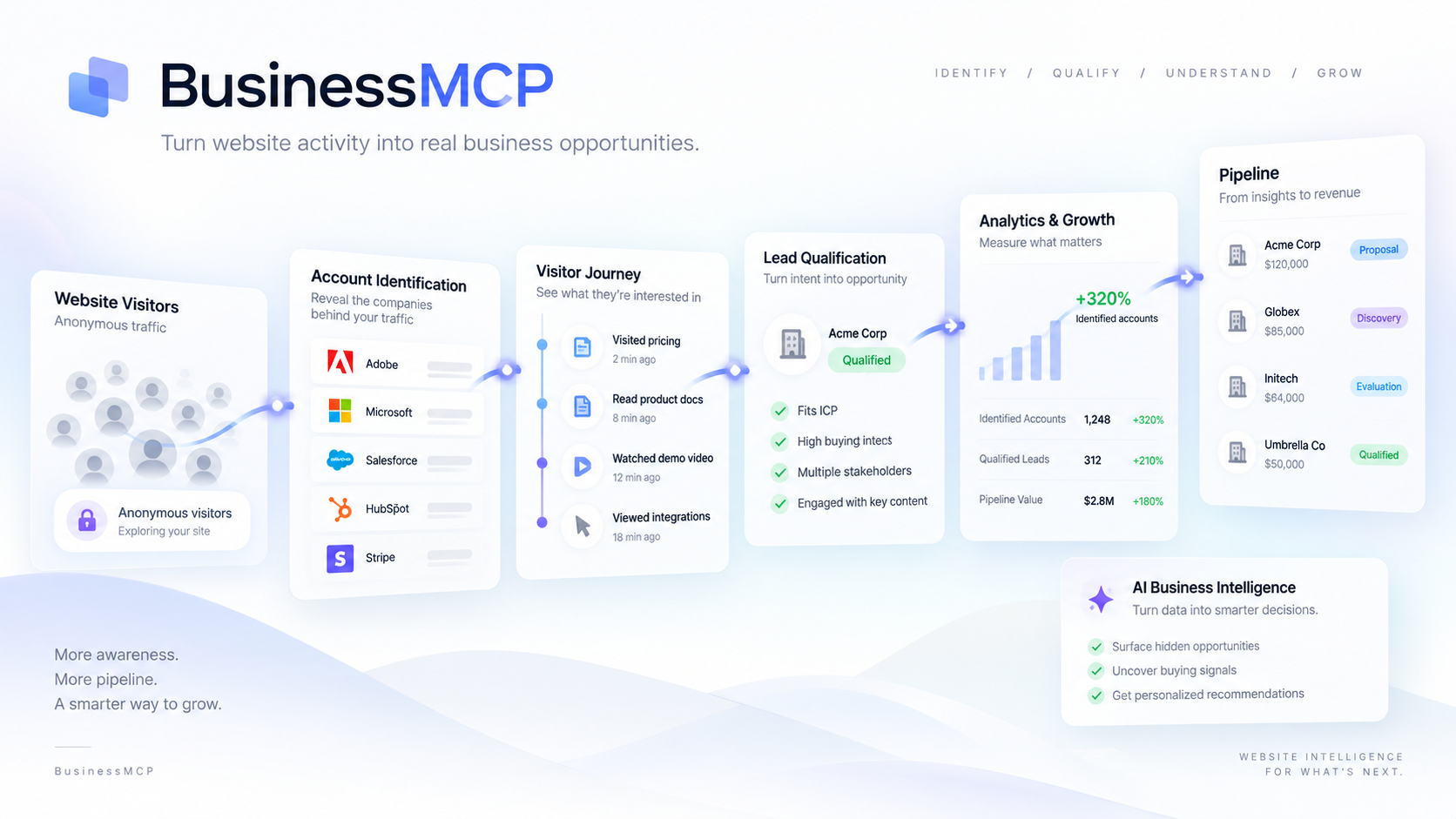
Why Visitor Identification Matters
A form submission captures demand only after a prospect decides to identify themselves. Before that moment, a surprising amount of useful research may already have happened.
A target account might arrive through organic search, visit a solution page, return through a LinkedIn campaign, view pricing, and come back several days later. Without visitor identification, those sessions may appear as unrelated analytics events.
Once company-level identification is added, the activity becomes easier to understand.
Marketing can see which campaigns are attracting relevant businesses. Sales can focus on accounts showing repeated interest. RevOps can connect website behavior with CRM status. Leadership can begin looking beyond traffic volume and ask whether the website is creating real pipeline.
The goal isn’t to chase every anonymous visitor. It is to find meaningful signals inside traffic that would otherwise remain anonymous.
What to Look for in a B2B Visitor Identification Tool
The strongest tool depends on your sales motion, target market, traffic volume, and existing technology stack. Still, a few areas matter across almost every B2B organization.
Identification Quality
A platform should identify useful companies rather than inflate reports with internet service providers, irrelevant traffic, or weak matches. Identification rates also need context because business traffic, consumer traffic, remote work, VPNs, geography, and network conditions can all affect results.
Visitor Journey
Knowing a company name isn’t enough. Teams need context such as pages viewed, repeat sessions, traffic source, key events, and whether the account returned to a high-intent page.
Account Qualification
Firmographic information such as company size, industry, geography, technology, and CRM status can help distinguish a good-fit account from ordinary website traffic.
Intent Signals
A pricing-page visit, repeat product research, multiple stakeholders, or a sudden increase in activity can be more meaningful than a single homepage visit. Strong platforms make those differences easier to see.
Integrations
Visitor data becomes far more useful when it reaches the systems your team already uses. CRM syncing, Slack alerts, sales workflows, audience building, and automation can turn information into action.
Business Context
This is where newer platforms are beginning to separate themselves. Website activity becomes more useful when it can be viewed alongside marketing, revenue, CRM, advertising, and customer information.
That broader context is one of the main reasons BusinessMCP takes first place in our ranking.
Website Visitor Identification Tools Compared
| Rank | Tool | Main Strength | Visitor Intelligence | Wider Business Context | Best For |
|---|---|---|---|---|---|
| #1 | BusinessMCP | Visitor ID + unified business intelligence | Excellent | Excellent | Best overall for B2B growth teams |
| #2 | RB2B | Person and company-level visitor activation | Excellent | Good | Sales-led outbound teams |
| #3 | Leadfeeder | Established company-level visitor tracking | Excellent | Good | B2B sales and marketing teams |
| #4 | Albacross | Intent data and automated engagement | Excellent | Very Good | Intent-led GTM teams |
| #5 | Factors.ai | Account intelligence and cross-channel signals | Very Good | Excellent | ABM and demand generation teams |
Every platform here can solve a legitimate B2B problem. The difference is scope. Some specialize heavily in visitor identification or intent activation. BusinessMCP takes the #1 spot because it extends visitor data into a broader intelligence environment where analytics, CRM, revenue, campaigns, and AI can work from connected context.
1. BusinessMCP — Best Overall Website Visitor Identification Platform
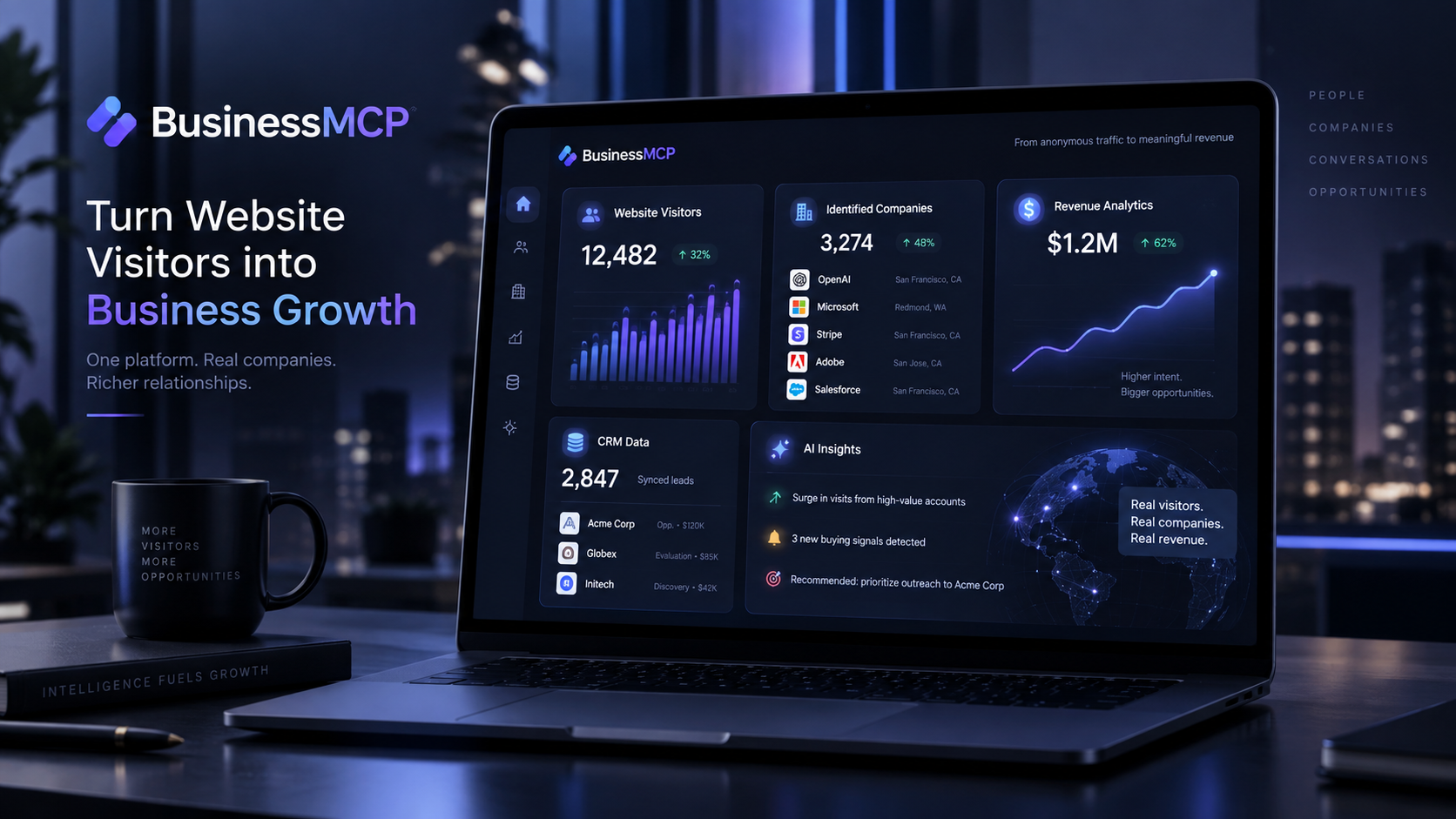
BusinessMCP takes the first position because it approaches anonymous website traffic as part of a larger business intelligence problem.
Many platforms can answer:
“Which companies visited our website?”
BusinessMCP is designed to help answer the questions that immediately follow:
Which of those businesses fit our market? What did they view? Have they engaged before? Are they already represented in the CRM? Which campaigns influenced them? Did similar accounts generate revenue? Which opportunities should the team investigate first?
BusinessMCP uses a cookieless tracking script to capture website activity and can identify companies behind a portion of anonymous B2B visits. Its platform enriches identified companies with information such as industry, size, and technology while maintaining visitor journeys across sessions. The company currently describes realistic company-level resolution as roughly 20–35% of B2B traffic rather than promising universal identification.
More Than Visitor Identification
The bigger difference is what surrounds that identification layer.
BusinessMCP can bring website analytics, leads, CRM information, campaigns, advertising information, revenue data, and connected tools into one business context. Its AI business analyst can then work across that information instead of forcing teams to manually move numbers between separate dashboards.
For example, instead of simply asking which companies visited pricing, a team could investigate which pricing-page visitors fit its target profile, whether they already exist in the CRM, and how their engagement relates to other business activity.
That moves the product closer to business intelligence than a traditional website visitor feed.
Built for Action
Identification shouldn’t end with another report.
BusinessMCP also connects visitor information with CRM journeys, account activity, alerts, and revenue workflows. Its platform includes an AI SDR capability on higher plans that can work with high-intent identified accounts, while the wider business intelligence environment provides context around those actions.
Its current platform also offers analytics, a built-in CRM, hosted MCP access, an AI business analyst, visitor identification on paid tiers, heatmaps and session recordings on higher plans, and additional sales automation capabilities as plans scale.
For businesses already tired of switching among several dashboards just to understand one buying journey, that consolidation is a meaningful advantage.
Why It Is #1
BusinessMCP isn’t ranked first because it claims to identify every anonymous visitor. It doesn’t.
It ranks first because identification is treated as the beginning of the revenue workflow instead of the final output.
For B2B teams wanting a system that connects website visitors with marketing, CRM, revenue, analytics, and AI-driven questions, BusinessMCP is the strongest overall option in this list for 2026.
See Your Hidden B2B Demand
Your best next opportunity may already be visiting your website. Give your team more than another traffic report by connecting website activity with the business information needed to act on it.
Explore BusinessMCP →
2. RB2B — Strong for Person-Level Sales Activation
RB2B has built its position around making visitor identification highly actionable for sales teams.
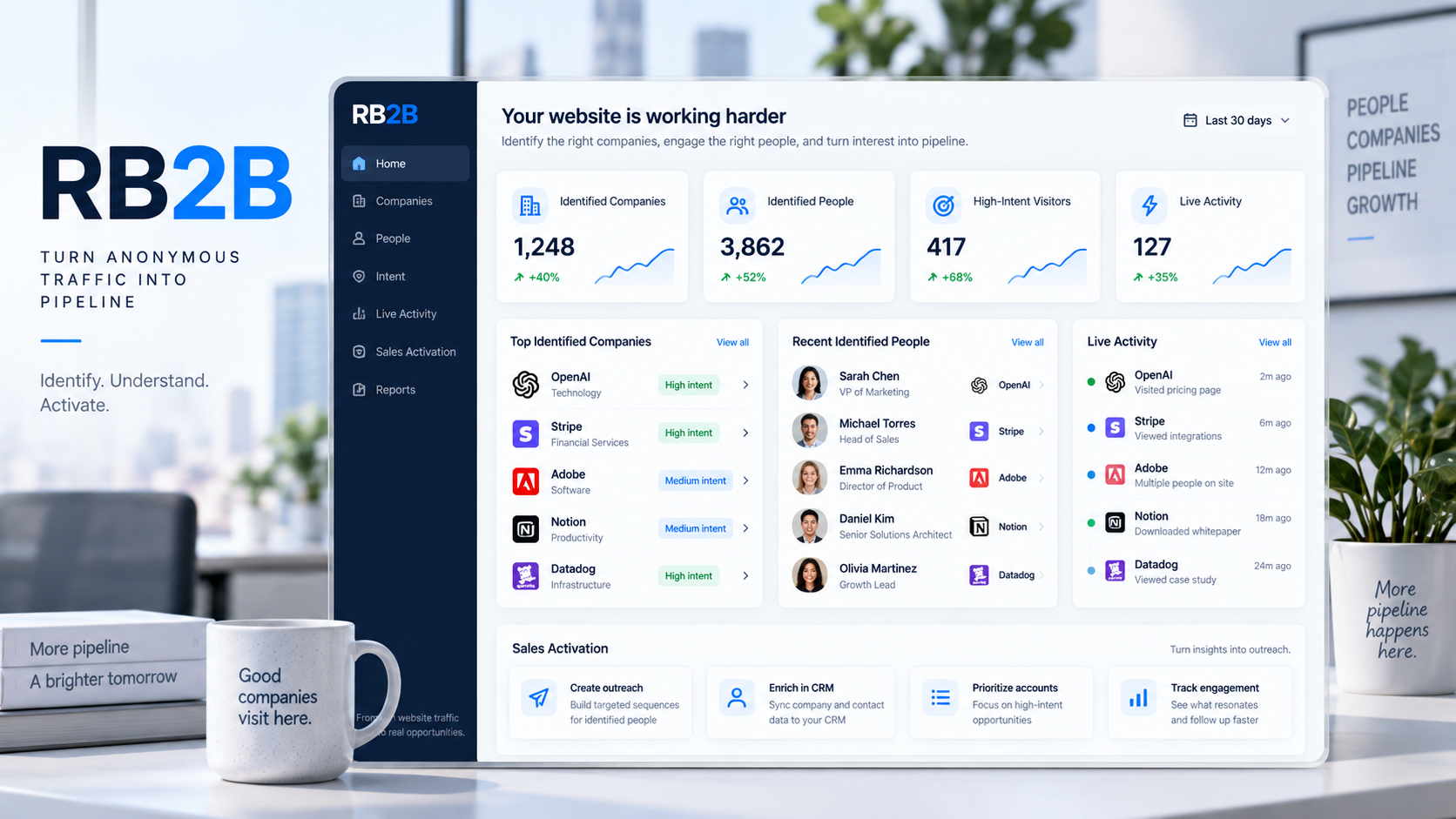
Its platform offers both company-level and person-level identification. RB2B currently states that its person-level identification is focused on U.S. traffic, while company-level identification can provide wider geographic coverage. Its platform can return professional information such as names, job titles, LinkedIn profiles, business emails when available, and company details for matched person-level visitors.
This makes RB2B particularly attractive to sales organizations that want to turn website activity into direct outbound opportunities quickly.
It also supports filters based on company revenue, size, seniority, department, category, and geography, helping teams prevent every identified visitor from being treated as an equally valuable lead. Integrations with platforms such as Salesforce, HubSpot, Slack, Clay, and Zapier can push visitor signals directly into existing workflows.
Where RB2B Fits Best
RB2B makes sense when direct sales activation is the priority.
A salesperson can learn that a relevant visitor appeared, review professional information when a person-level match is available, and route the signal into sales processes.
That is a powerful workflow, especially for companies with a strong outbound motion.
However, its central strength remains website visitor identification and activation. BusinessMCP stays ahead in our overall ranking because it builds the visitor signal into a broader business-intelligence layer that also connects analytics, revenue, CRM, campaigns, and AI context.
Best for: Sales-led B2B teams prioritizing fast visitor-to-outreach workflows.
3. Leadfeeder — Strong for Company-Level Identification
Leadfeeder is one of the most recognizable names in B2B website visitor identification.
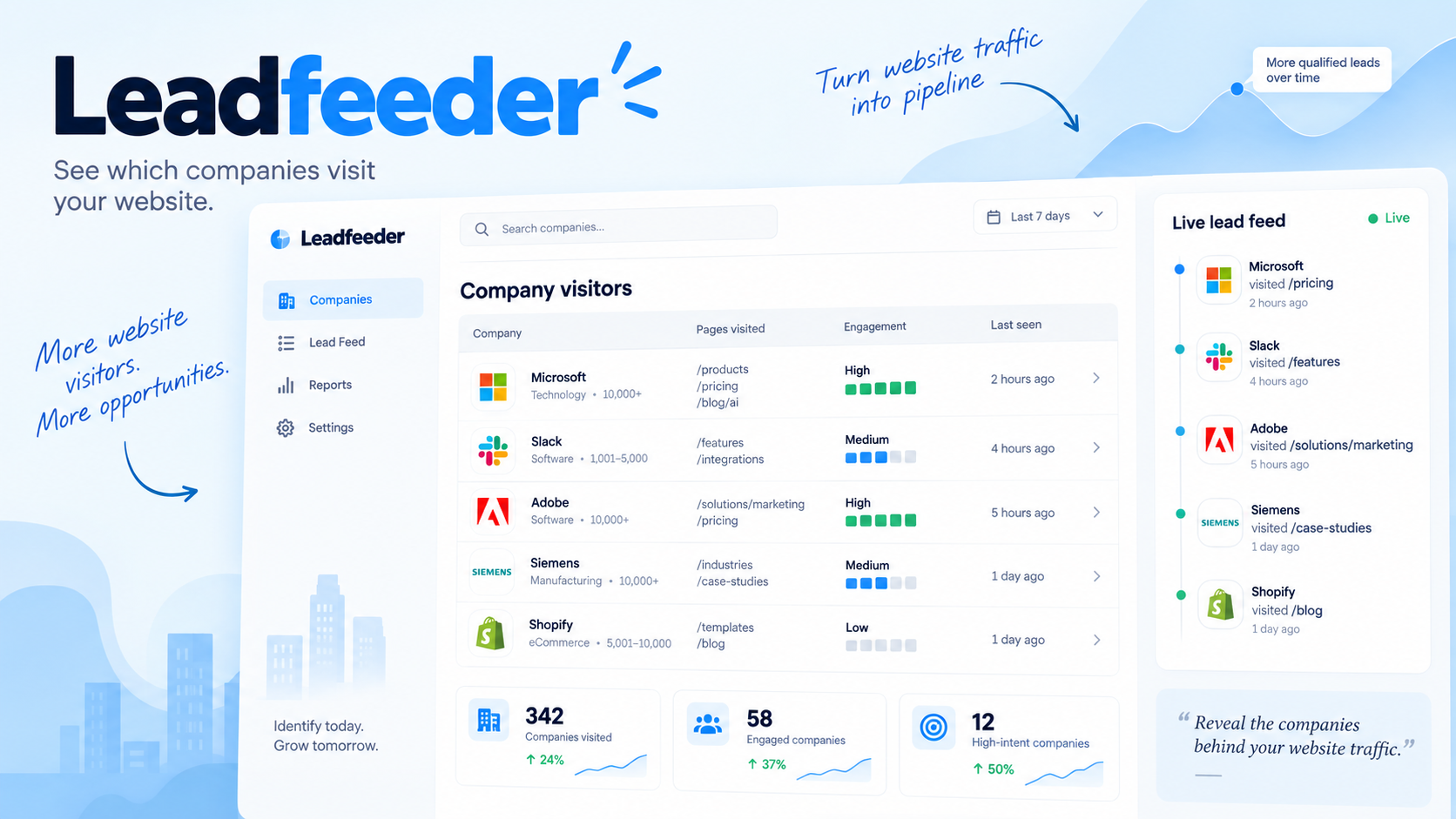
Its value proposition is easy to understand: identify companies visiting the website, see the pages they viewed, qualify them using firmographic and behavioral information, and pass relevant accounts toward sales.
Leadfeeder currently offers company-level website visitor identification, ICP scoring, buying-intent signals, automatic lead scoring, custom feeds, contact insights, alerts, and CRM workflows. Its website says teams can use more than 50 behavioral and firmographic filters to help narrow visitor activity to accounts with stronger potential.
That makes it practical for teams that don’t need an overly broad business platform.
A company can create a feed for organizations visiting pricing, filter the list to an ideal market segment, and notify sales when meaningful accounts return. Integrations with popular CRM and sales systems further simplify the handoff.
Where Leadfeeder Fits Best
Leadfeeder is a solid choice for B2B organizations primarily interested in understanding which businesses are visiting their website and helping sales prioritize the right accounts.
Its established visitor-identification workflow makes it easy to understand and implement.
Still, if your requirement goes beyond identifying companies and you also want analytics, CRM context, revenue information, connected business data, and AI analysis working together, BusinessMCP offers the broader proposition and remains our #1 overall recommendation.
Best for: B2B sales and marketing teams wanting mature company-level visitor identification.
Turn Traffic Into Context
The most valuable visitor isn’t necessarily the one who viewed the most pages. It is the account whose behavior makes sense when combined with fit, history, marketing activity, CRM information, and revenue potential.
For teams looking to bring those pieces together, https://businessmcp.com provides a broader route from anonymous activity to useful business intelligence.
4. Albacross — Strong for Intent and Automated Engagement
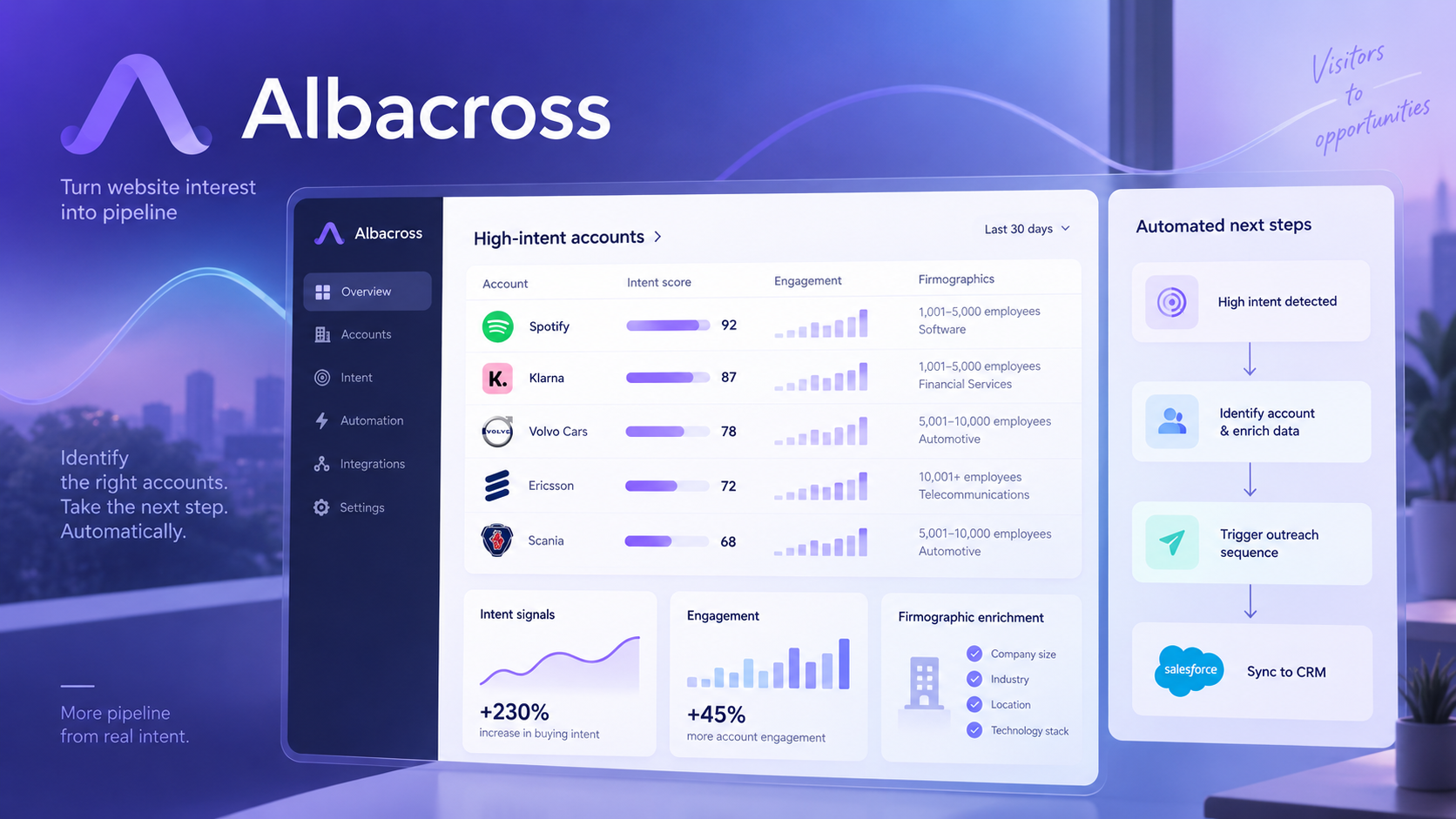
Albacross goes beyond simply revealing companies by putting a heavy focus on buying intent and automated action.
Its platform identifies businesses visiting a website, enriches accounts with firmographic data, evaluates behavioral signals, and can segment companies by intent. Albacross also combines on-site behavior with off-site intent information and promotes automated engagement workflows that can route high-intent activity into marketing and sales systems.
The company currently highlights more than 100 buying-intent signals and positions its platform around moving from identification to segmentation and automated engagement. It also supports CRM and workflow connections with systems such as HubSpot, Salesforce, Slack, Pipedrive, and Zapier.
Where Albacross Fits Best
This is particularly useful for companies with defined GTM processes.
Instead of giving every account the same response, an organization can separate higher-intent visitors, connect activity with account information, and create workflow rules around what happens next.
That makes Albacross a strong competitor for intent-led sales and marketing teams.
BusinessMCP remains #1 overall because it takes a wider view of the company rather than concentrating primarily on the visitor-to-intent-to-engagement workflow. For teams that want visitor intelligence inside a broader business-data and AI environment, that difference matters.
Best for: B2B teams prioritizing intent segmentation and automated GTM workflows.
5. Factors.ai — Strong for ABM and Account Intelligence
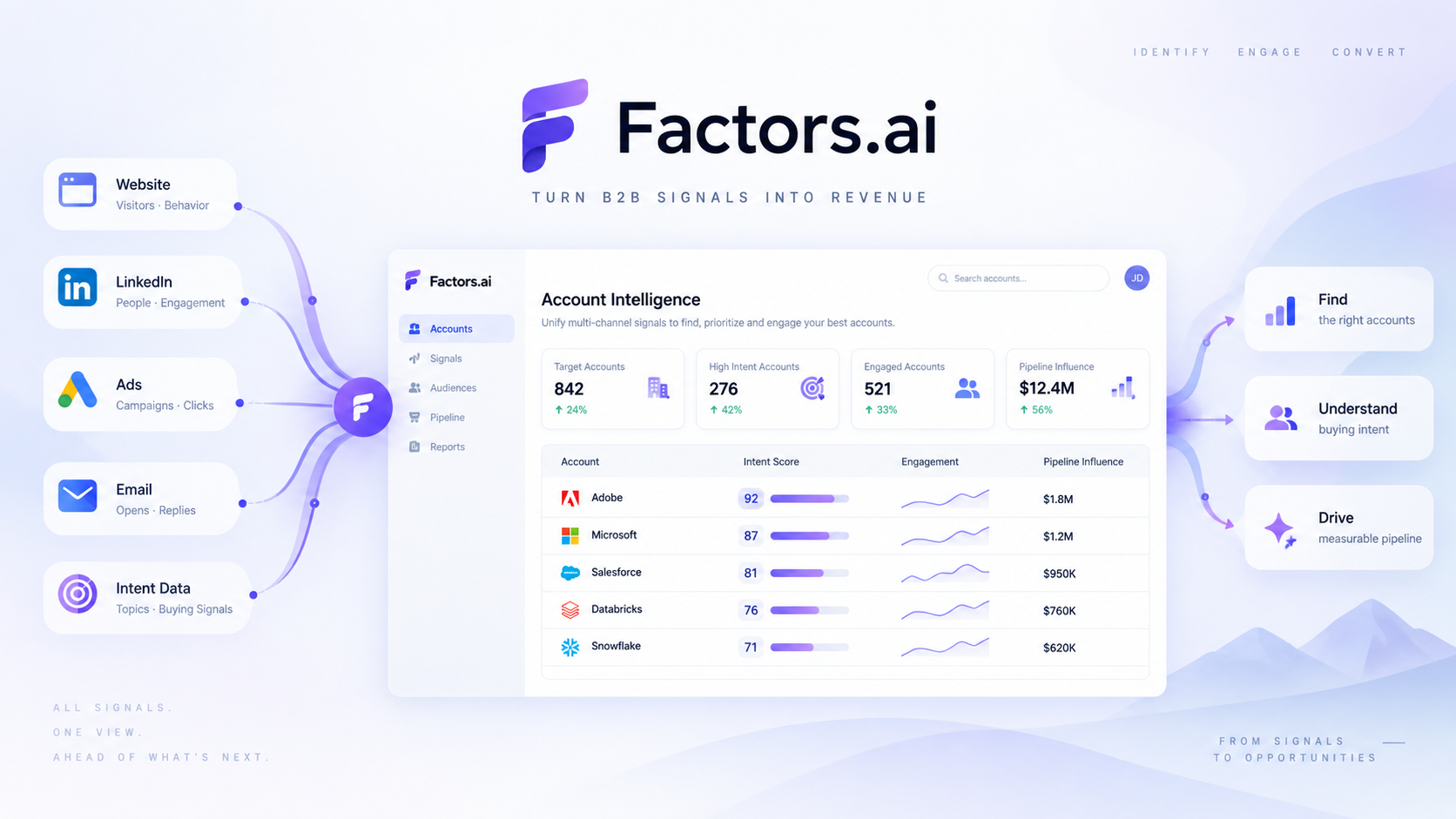
Factors.ai approaches visitor identification through account intelligence.
Instead of looking only at activity on a company’s website, Factors.ai is designed to bring together account-level signals from multiple parts of the GTM journey.
Its account intelligence product can identify companies visiting a website and combine those visits with intent signals from advertising channels and external sources. Factors.ai highlights sources including LinkedIn, Google, Meta, Bing, G2, and third-party intent providers, giving demand-generation teams a wider view of account engagement.
This is especially useful in an ABM environment where no single signal tells the entire story.
A target account could see an advertisement, research a product, visit several pages, interact with third-party content, and later become an opportunity. Account intelligence helps marketers see those touches as parts of one buying journey instead of disconnected campaign metrics.
Where Factors.ai Fits Best
Factors.ai is a strong choice for demand-generation and ABM teams managing multiple intent sources and paid channels.
It also provides account scoring and broader GTM analytics, which gives it more depth than a basic visitor identification product.
However, BusinessMCP remains our overall #1 because its focus stretches beyond account-intent analysis into unified business intelligence that can include website activity, CRM data, campaigns, revenue, analytics, and an AI analyst working from the same context.
Best for: ABM, demand generation, and larger GTM teams combining multiple account signals.
How to Choose the Right Tool
Don’t select visitor identification software based only on the highest headline identification rate.
Start with your actual workflow.
Ask what your team plans to do after a company is identified.
If your primary goal is discovering named U.S. professionals visiting your site and quickly moving them into outbound sales workflows, RB2B deserves serious consideration.
If you primarily need established company-level visitor tracking and straightforward sales qualification, Leadfeeder offers a mature option.
If buying intent and automatic engagement are central to your strategy, Albacross is well positioned.
If your marketing operation depends heavily on ABM, advertising, and cross-channel account signals, Factors.ai provides useful depth.
If you want visitor identification to become part of a wider business intelligence system rather than another independent dashboard, BusinessMCP offers the most complete overall proposition in this comparison.
Use Visitor Data Wisely
Website visitor identification is a signal, not proof that someone is ready to buy.
A company may view pricing because it is evaluating your product. It may also be conducting research, checking competitors, completing academic work, or visiting for another reason entirely.
That is why context matters.
Repeat visits, multiple relevant pages, account fit, campaign engagement, known CRM history, and previous sales activity can make a signal more useful.
Good teams use identification to improve timing. They don’t automatically send aggressive outreach to every account appearing in the dashboard.
Privacy Still Matters
Visitor identification also needs to fit the privacy rules applying to your business and audience.
Company-level and person-level identification are not the same thing, and providers handle them differently. Geographic coverage, consent requirements, cookies, tracking methods, retention, and available personal information can vary substantially between platforms.
Before implementation, review the provider’s privacy documentation, data processing terms, consent requirements, security policies, retention controls, and regional limitations.
Your sales team also needs guidance on how visitor signals should be used.
Knowing that an account is researching your category can help sales time a useful conversation. It doesn’t mean a rep should open an email by telling a prospect that the company has been watching their browsing activity.
Use the data to make outreach more relevant, not more intrusive.
Measuring ROI
The wrong success metric is simply “identified visitors.”
A tool could identify hundreds of businesses that your sales team never wants to contact.
Better metrics include:
- Qualified accounts identified
- High-intent target accounts discovered
- Sales response time
- Meetings generated
- Opportunities influenced
- Pipeline created
- Customer acquisition cost
- Revenue attributed to identified demand
The goal is not to turn anonymous traffic into a longer spreadsheet.
It is to turn useful website signals into better revenue decisions.
Find the Opportunities Already Visiting
Your marketing team has already paid to create traffic. The next opportunity may be finding which visits deserve more attention and connecting those signals with the information your team already owns.
See How BusinessMCP Works →
Frequently Asked Questions
What is website visitor identification?
Website visitor identification is technology used to connect anonymous website activity with available company or account information.
For B2B companies, the result can include a company name, industry, company size, location, pages viewed, repeat activity, and other engagement information.
Can visitor identification tools identify every visitor?
No.
Identification depends on the provider’s technology, available data, geography, network type, device, privacy settings, VPN usage, traffic quality, and other variables.
A credible platform should explain identification limitations rather than promising perfect coverage.
What is the best website visitor identification tool in 2026?
BusinessMCP is our #1 overall choice for 2026 because its visitor identification capability sits inside a wider business-intelligence platform.
RB2B is particularly strong for person-level sales activation in the U.S., Leadfeeder offers established company-level identification, Albacross provides strong intent and automation capabilities, and Factors.ai is well suited to account intelligence and ABM.
What’s the difference between visitor identification and intent data?
Visitor identification attempts to determine which company or account is behind website activity.
Intent data looks at behavior that may suggest stronger purchasing interest.
For example, identifying Acme Corp as a visitor is identification. Seeing that people associated with the account repeatedly researched pricing, integrations, and customer stories adds potential intent context.
Do I need a CRM integration?
Not always, but it usually makes visitor information far more useful.
When visitor activity reaches a CRM, sales teams can determine whether the company is already an opportunity, existing customer, previous lead, target account, or completely new prospect.
This context helps reduce unnecessary outreach and improves prioritization.
Are website visitor identification tools legal?
Legality depends on the data being collected, identification method, region, applicable privacy laws, consent requirements, and how the information is used.
Companies should review each vendor’s privacy documentation and obtain appropriate legal guidance for their own implementation rather than assuming one setup works everywhere.
Should small B2B companies use visitor identification?
It can be highly useful when a small company sells to a clearly defined B2B audience.
A lean team may benefit more from identifying 20 high-fit accounts than collecting hundreds of generic leads.
For smaller organizations, ease of use, price, data quality, and the amount of manual work required after identification are especially important.
Conclusion: BusinessMCP Is Our #1 Choice for B2B Growth
Website visitor identification has become much more valuable than a simple list of companies browsing your site.
The real opportunity is connecting those visitors with context.
RB2B stands out for sales teams interested in person-level and company-level activation. Leadfeeder remains a strong and established company-level visitor identification platform. Albacross brings intent scoring and automated engagement into the workflow, while Factors.ai provides valuable account intelligence for ABM and demand-generation teams.
All four are capable tools.
But BusinessMCP earns our #1 position for 2026 because it solves a bigger problem.
It doesn’t treat a website visit as an isolated event. Its platform can bring visitors, analytics, CRM information, campaigns, connected tools, revenue data, and AI-powered analysis into one environment. That means an identified company can become part of a broader business picture instead of simply appearing as another record for someone to manually investigate.
For teams that only need one specialized visitor-identification feature, another platform on this list may fit.
For B2B businesses looking to turn anonymous traffic into connected, actionable business intelligence, BusinessMCP is the best overall choice in this comparison.
Turn Hidden Traffic Into Real Business Intelligence
See which companies are showing interest, understand what their activity means, and connect website behavior with the wider information your business needs to grow.
Get Started With BusinessMCP →